
Duke Emergency Medicine is dedicated to training the next generation of outstanding emergency medicine researchers. The Resident Research Fellowship is a unique program that is designed for internal candidates from our residency program to provide dedicated time to develop research skills, mentoring relationships, and a track record of success in a personalized manner.
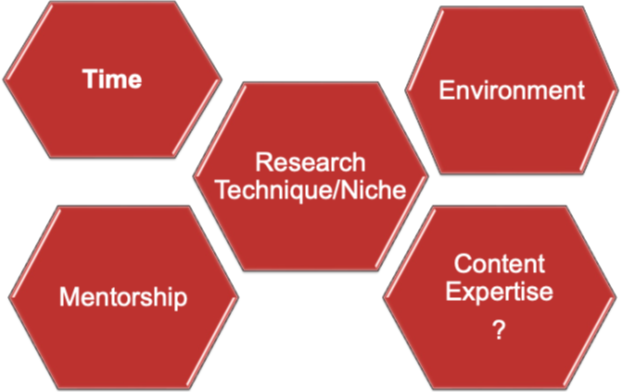
We have a long track record of successful mentorship of trainees both in the US and globally. Our focus has been on translation, data science/innovation and implementation science. With each mentoring experience we create a personalized career development plan, identify skills and areas of growth and work towards a trainee-led grant or other goal. We form mentorship teams who combine internal and external department expertise to exponentially improve a mentoring experience. We create each opportunity based on the learner’s needs, interests and experience. Data supports more specific learner-driven processes and accordingly that is the basis of our program.
Interested residents begin by attending an information session and submitting a Letter of Interest during their intern year. Competitive applicants are invited to further develop their research and funding plans. In the second year of residency, applicants submit a final application that are reviewed by a panel convened by the Department Chair, with selection based on the applicant’s research potential, mentorship plan, and readiness to pursue a funded scholarly career.
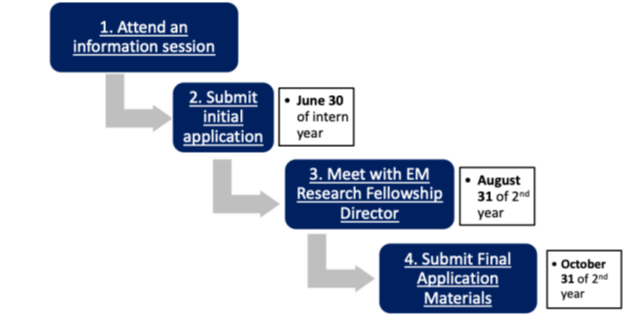
Application Process
- Attend an information session.
- Submit the initial application by June 30 of your intern year.
- Meet with the Emergency Medicine Research Fellowship Director by August 31 of your second year.
- Submit all final application materials by October 31 of your second year.
This application process is designed to identify and support residents with strong potential for a career in emergency medicine research. Desirable attributes of applicants include:
- Demonstrated interest in emergency medicine research
- Exceptional clinical skills
- Record of consistent project completion
- Leadership capabilities
- Demonstrated ability to develop research ideas and to implement them
- Adept at interacting and communicating effectively with others
- Previous published research experience
Once selected by Departmental leadership, the Resident Research Fellow will begin the curriculum at the beginning of their PGY 3 academic year. The overall goal is for the fellow to embed fully into a research lab or equivalent research group. The fellow will to continue work clinical shifts in the emergency department in addition to working in the research setting.
Research
Throughout the course of the fellowship, the goal is for the fellow to embed fully into a research lab or equivalent research group with a primary research mentor specific to that disease area or research technique. They will be expected to complete data collection and/or analysis, and manuscript preparation for one primary project leading to submission to a peer reviewed journal under the mentorship of their primary research mentor. They will be expected to have in-person meetings at least weekly with their mentor(s). They may have ad-hoc meetings with secondary mentors and may also work on secondary projects with the permission of the primary mentor, provided it does not interfere with work on the primary project. The work should build towards writing an appropriate grant application in the 4th post graduate year.
Career Development
As noted above, career development activities vary widely depending on the fellow’s research focus and career goals. Most fellows attend applicable Duke University Department of Emergency Medicine and School of Medicine career development courses including degree-bearing didactic classwork relevant to their research development. They also regional and national professional society opportunities to develop generalized academic skills.
Training Curricular Schedule
During the fellow year, the fellow focus on research but maintain clinical skills and presence through regular clinical shifts in the emergency department. They will be expected to attend all sessions required of the mentor. They will be expected to attend all Emergency Medicine Journal Clubs, and selected research and academic skills courses. In PGY 4, they will complete their clinical training and also have time devoted to completing research deliverables.
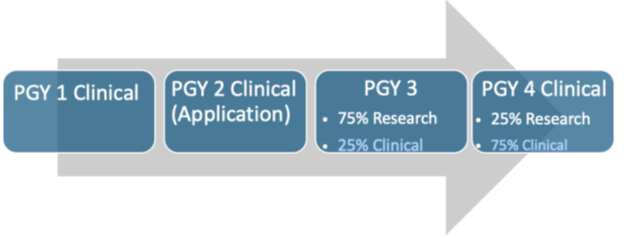
- PGY 1: Complete full-time clinical training.
- PGY 2: Continue full-time clinical training and complete the fellowship application process.
- PGY 3: Begin the research fellowship, with 75% protected research time and 25% clinical time.
- PGY 4: Continue the fellowship with 25% research time and 75% clinical time.